How Your Solar System Can Earn Money: Virtual Power Plants Explained
Technical guide to earning €800-1,500/year in grid services revenue from your Costa del Sol solar+battery system through Virtual Power Plant participation
Most solar owners don't realize their €45,000 battery system can do more than store afternoon sunshine for evening use. Since Spain's mid-2025 regulatory update (Operating Procedure 7.4), your solar inverter and battery can now participate in grid stabilization services—and get paid for it. We're not talking pocket change: a properly configured 12kW solar system with 13.5kWh battery can generate €800-1,500 annually in additional revenue through Virtual Power Plant (VPP) participation, on top of your existing self-consumption savings. This is engineering fact, not marketing theory.
What Are Virtual Power Plants? The Technical Definition
A Virtual Power Plant aggregates hundreds or thousands of distributed energy resources (DERs)—your solar panels, batteries, heat pumps, and smart devices—into a single coordinated entity. Think of it as a traditional power plant, but instead of one massive turbine in Sevilla, it's 5,000 rooftop solar systems across Málaga responding in milliseconds to grid operator commands. When Red Eléctrica España (Spain's transmission system operator) needs frequency regulation at 2:47 PM, your battery automatically discharges 3.2 kW for 8 minutes. You don't lift a finger. The VPP aggregator handles bidding into wholesale markets, balancing responsibilities, and regulatory compliance. You simply receive quarterly payments for making your battery available.
Spain's Regulatory Breakthrough: Why 2025 Changes Everything
Royal Decree-Law 6/2022: The Foundation
This March 2022 regulation did three critical things: (1) Released 10% of grid capacity (7 GW) specifically for self-consumption installations, removing the biggest barrier to residential solar growth. (2) Created the legal framework for standalone battery storage facilities connected to the grid—batteries weren't even a recognized asset class before this. (3) Established authorization processes for battery projects to sell services back to the grid. Without RD 6/2022, Virtual Power Plants in Spain would be stuck in regulatory limbo.
Operating Procedure 7.4: Voltage Control Authorization
The mid-2025 update to Operating Procedure 7.4 was the game-changer. For the first time, solar PV installations (including residential systems when aggregated) can now provide voltage control services to the grid—services historically reserved for conventional power plants. This opened ancillary service markets worth hundreds of millions annually. Your 10kW inverter can now respond to voltage fluctuations within 200 milliseconds, helping stabilize the grid and getting compensated for it. The technical requirement: smart inverters with reactive power control capability and remote dispatch integration.
EU Directive 944/2019: Independent Aggregator Rights
The European Union mandated that all member states enable independent aggregators to participate in energy markets by end of 2020. Article 17 specifically pushed Spain to permit aggregators to pool distributed resources and compete in wholesale/ancillary markets. This wasn't optional—it's EU law. Spain's transposition means you can choose your VPP aggregator just like choosing an internet provider. Competition drives better revenue-sharing models. Current market split: aggregators typically keep 15-25% of grid service revenues, passing 75-85% directly to asset owners (you).
Three Revenue Streams: How Your Battery Actually Earns Money
Frequency Regulation (FCR, aFRR Services)
Europe's grid runs at 50 Hz. When frequency drops to 49.8 Hz (too much demand) or spikes to 50.2 Hz (too much generation), grid operators need instant corrective action. Your battery can respond in under 1 second for Frequency Containment Reserve (FCR) or 5-10 seconds for automatic Frequency Restoration Reserve (aFRR). Payment structure: capacity payments (€/MW/hour just for being available) plus energy payments (€/MWh when actually activated). A 13.5 kWh battery providing 8 kW discharge capacity can earn €350-600/year in FCR markets alone. The technical requirement: battery must maintain 90% state-of-charge bandwidth for 15-minute response windows.
Voltage Control Services (The New Market)
Grid voltage must stay within ±10% of nominal (230V ±23V for residential connections). When voltage sags due to heavy air conditioning load on summer afternoons, your inverter can inject reactive power (VARs) to prop it back up. This isn't energy storage—it's reactive power support using your inverter's power electronics. Payment: €/MVAR-hour for reactive capacity. A 10 kW inverter can typically provide 4-6 kVAR reactive support, earning €200-400/year in newly-opened voltage control markets. Zero battery wear because it's purely inverter-based. This is the Operating Procedure 7.4 breakthrough in action.
Energy Arbitrage: Buy Low, Sell High
Spanish wholesale electricity prices fluctuate wildly. In April 2025, daily price spreads averaged €28.40/MWh—meaning electricity at 3 AM cost €0.02/kWh while 8 PM peak hit €0.17/kWh. Your battery can automatically charge from the grid when prices crater and discharge during peaks. On a 13.5 kWh battery cycling once daily, that's 13.5 kWh × €0.15 spread × 250 profitable days = €506 annual arbitrage profit. Combine this with self-consumption (using your own solar instead of €0.30/kWh retail electricity) and you're stacking revenue streams. The requirement: time-of-use tariff and smart battery management system that tracks real-time pricing.
Technical Requirements: Is Your System VPP-Ready?
Not every solar system can participate in VPPs. Here's what you need: (1) Smart hybrid inverter with bidirectional power flow, reactive power control, and communication protocols (Modbus TCP, SunSpec, IEC 61850). DEYE, SMA, Fronius, and Huawei inverters all meet these specs. (2) Battery storage with sufficient cycle life—LiFePO4 chemistry is ideal because it handles 5,000+ cycles at 90% depth-of-discharge. Lithium NMC works but degrades faster with frequent cycling. (3) Internet connectivity for aggregator dispatch commands—cellular or broadband, sub-5 second latency required. (4) Smart meter compliant with IEC 62056 standards for real-time monitoring. Most Spanish installations post-2020 already have these components—you may just need firmware activation.
Real-World Economics: Costa del Sol Case Study
Let's run the numbers on an actual LIT Electricians installation in Marbella: 12 kW solar array (30× 400W panels), 13.5 kWh LiFePO4 battery, DEYE 12kW hybrid inverter. Total investment: €45,000. Without VPP participation: Self-consumption savings €7,200/year (eliminating 85% of €680 monthly electricity bill). ROI: 6.25 years. With VPP participation: Same self-consumption savings €7,200/year, PLUS VPP revenues €1,200/year (€500 frequency regulation + €300 voltage control + €400 arbitrage). Total annual benefit: €8,400. New ROI: 5.36 years. That's 14% faster payback just for letting your battery help stabilize the grid a few minutes per day. Over 10 years, VPP participation adds €12,000 to system value.
How to Participate: The Aggregator Selection Process
You don't directly bid into wholesale markets—that requires trading licenses and 24/7 operations teams. Instead, you contract with a VPP aggregator who handles all market complexity. Selection criteria: (1) Revenue share model—75-85% to you is standard, avoid anything below 70%. (2) Contract flexibility—monthly or quarterly cancellation, not multi-year lock-ins. (3) Technical compatibility—verify they support your inverter brand and battery chemistry. (4) Insurance coverage—aggregator should carry liability insurance for grid interaction failures. (5) Track record—ask for references from existing participants. In Spain, established VPP aggregators include Statkraft, Next Kraftwerke, and Enel X, plus emerging local players. LIT Electricians can facilitate introductions and handle technical integration for Málaga installations.
Future Outlook: Why VPP Revenue Will Grow
Spain targets 22.5 GW of energy storage capacity by 2030—currently at under 3 GW. As renewable penetration grows (solar already #1 power source in Spain at 25% of generation), grid operators need more flexibility, not less. Price volatility is increasing: 2025 daily spreads are 40% higher than 2023 averages, making arbitrage more profitable. The EU Clean Industrial Deal commits €65 billion to energy transition subsidies, with significant allocation for demand response and VPP infrastructure. Your solar+battery system isn't just reducing your electricity bills—it's becoming a grid asset that gets paid for stability services. Five years from now, not participating in VPPs will be like having a rental property and leaving it vacant. It's free money on the table.
About the Author
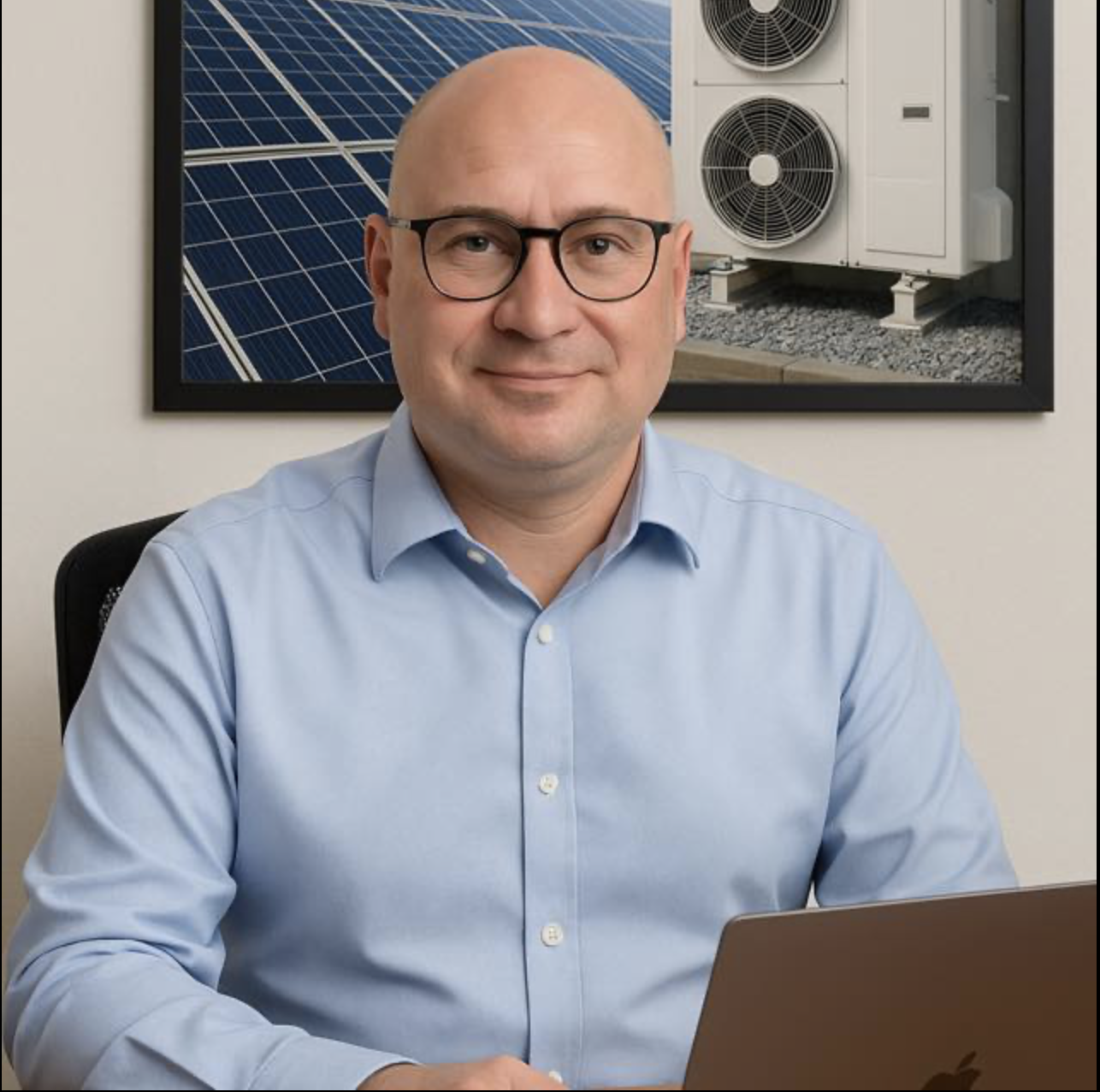
Ben Hayden
English-Speaking Electrician & Independent Energy Advisor
Ben Hayden is an English speaking electrician and independent energy advisor based in Marbella, Spain, with over 15 years of electrical experience across Europe. He provides independent energy and electrical checks for overseas property owners and managers across the Costa del Sol — helping clients cut electricity bills, navigate Spanish regulations, and make confident decisions on solar PV, heat pump, EV charger and battery storage projects.
Ben advises in plain English on projects where the paperwork is in Spanish and the stakes are high. His writing has appeared in ExpatArrivals, The Olive Press, Euro Weekly News, BuildingTalk and pv magazine.
Ready to Make Your Solar System Earn Money?
Get a VPP-readiness assessment from our engineering team. We'll analyze your existing system (or design a new one) for maximum VPP revenue potential, handle aggregator onboarding, and ensure your installation meets all technical requirements for grid services participation.
Regulations & Standards
Learn more about the Spanish and EU regulations enabling Virtual Power Plants:
Royal Decree-Law 6/2022 (Spain)
Spanish regulation establishing grid access rights for self-consumption and battery storage facilities
EU Directive 944/2019 - Clean Energy Package
European directive mandating member states to enable independent aggregator participation in energy markets
Red Eléctrica España - Grid Operator Data
Real-time grid data API and ancillary services market information from Spain's TSO
MITECO - National Energy Climate Plan
Spain's 2030 energy storage targets and renewable integration strategy
IEC 61850 - Smart Grid Communication Standard
International standard for power system automation and grid communication protocols
Related Services
Solar PV Installation Marbella
VPP-ready solar systems with smart inverters and grid integration
Battery Storage Marbella
LiFePO4 battery systems optimized for frequency regulation services
Solar PV Installation Sotogrande
Luxury villa solar systems with VPP revenue optimization
Solar PV Installation Estepona
Grid-interactive solar installations for maximum revenue potential