
10 kW Deye Hybrid Solar + 10 kWh Battery — Mijas Villa
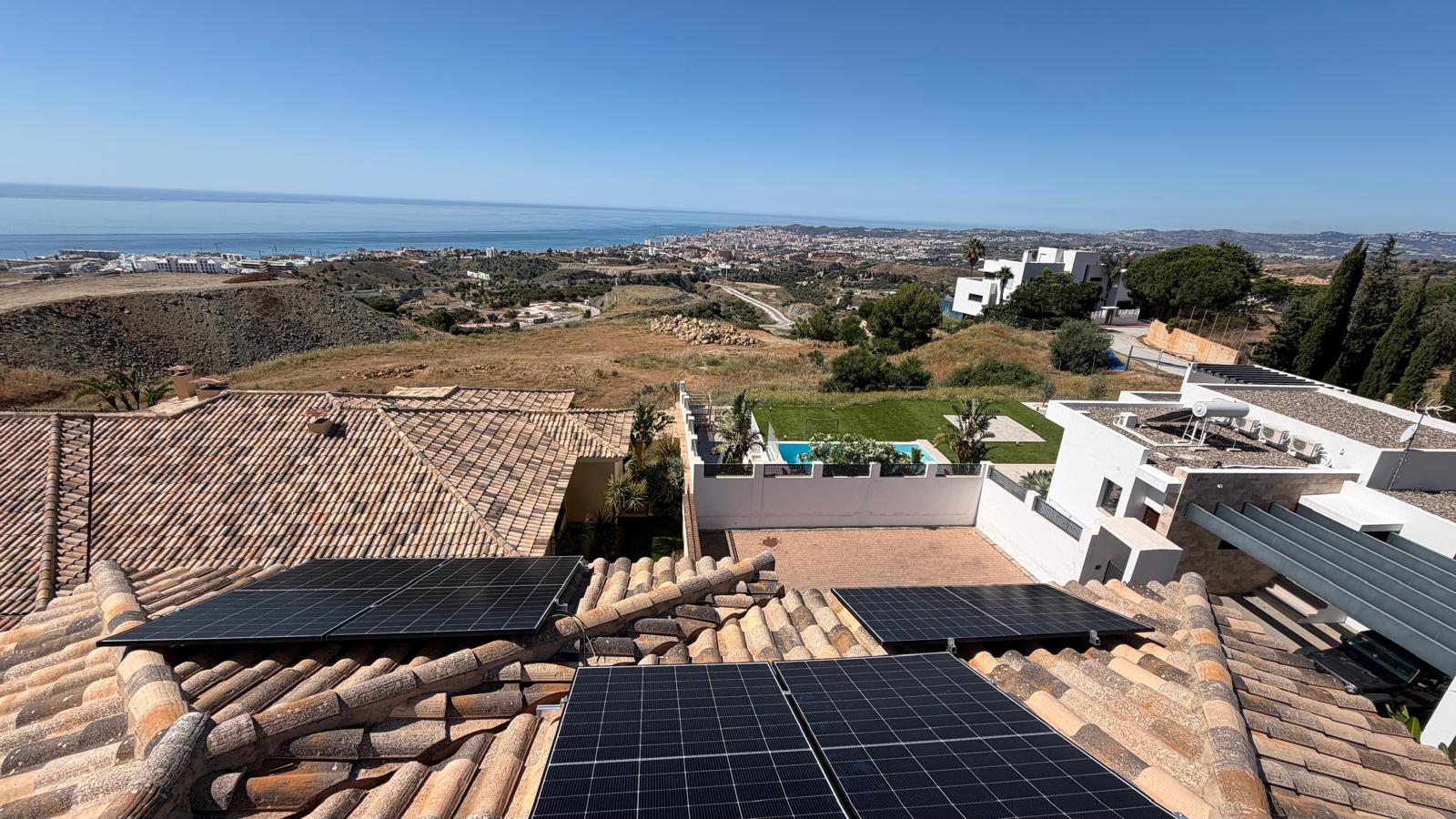
10 kW single-phase Deye hybrid inverter, 12× 500 W panels (6 kWp), 10 kWh battery storage, and a dedicated critical-load circuit at a Mijas villa — inverter sized for future panel expansion with 4+ kW of DC headroom still available.
 By Ben Hayden
Project Overview
The Challenge: High Grid Electricity Costs + No Blackout Protection for Pool & Security Systems
Design a solar-plus-storage system for a Mijas villa that cuts the grid bill, protects pool and security loads during blackouts, and leaves genuine inverter headroom for a future panel expansion — without oversizing the battery or constraining the system architecture to today's load profile.
The Solution
Mijas villa installation combining a Deye SUN-10K-SG04LP1 single-phase hybrid inverter, 12 × 500 W solar panels and two 5 kWh battery modules. The 6 kWp array, 10 kW inverter rating and 10 kWh nominal storage capacity are different design quantities, not a measure of guaranteed spare capacity. The design identifies critical circuits for backup rather than assuming every household load can run simultaneously during an outage. Future panel or battery expansion requires checks against the exact inverter documentation, string limits, protective devices, mounting and applicable registration requirements. Runtime, solar output and savings depend on operation and demand.
Technical Specifications
- Deye SUN-10K-SG04LP1 single-phase 10 kW hybrid inverter
- 12× 500 W mono PERC solar panels — 6 kWp total
- 2× Deye 5 kWh lithium batteries — 10 kWh storage
- Critical load wiring — pool, alarm, router, lighting, fridge
- Dual MPPT — future-proofed for second string expansion
- CAU registration with Endesa for surplus compensation
Our Installation Process
Why a 10 kW Inverter for a 6 kWp Array
The standard practice for a residential solar install is to size the inverter close to the array — a 6 kWp array goes on a 5 kW or 6 kW inverter. We deliberately broke that rule here, and for good reason. The client's roof has a second south-facing plane that is currently unused. It can accept another 6–8 panels — roughly 3–4 kWp — without any structural work. If we had specified a 6 kW inverter today, adding those panels later would have meant replacing the inverter entirely: a cost of €1,500–2,500 plus labour, plus re-commissioning, plus updating the grid paperwork from scratch. By specifying the Deye SUN-10K-SG04LP1 — a 10 kW AC output unit with a 12.5 kW maximum DC input — we installed an inverter that can absorb today's 6 kWp array comfortably and still accept a further 4–6 kWp on the second MPPT input without any change to the inverter itself. The cost difference between a 6 kW and a 10 kW Deye hybrid is modest — around €300–500 — and that premium buys the client a genuine upgrade path that requires only new panels, a cable run, and a CAU amendment, not a new inverter.
Critical Load Wiring: What It Is and Why It Matters
A standard solar-plus-battery system protects the whole house during a grid outage — which sounds ideal until you realise that powering the full house from a 10 kWh battery is a very different proposition from powering just the essential loads. A pool pump running at full speed, three air conditioning units, an electric oven, and a hot tub will drain 10 kWh in two to three hours. Run only the alarm, router, key lighting circuits, the pool pump controller (not the pump itself at full speed), and the fridge, and the same battery lasts 18–24 hours through the night and into the next morning when solar recharges it. Critical load wiring solves this by splitting the main distribution board into two sections: a critical load sub-panel fed directly from the inverter's backup AC output, and everything else fed from the grid-connected main supply. The inverter monitors the grid continuously. The moment it detects a grid outage, it switches the critical load panel to battery-backed island mode in under 20 milliseconds — fast enough that no connected device notices the transition. Non-critical loads — heavy appliances, additional AC zones — simply lose power during the outage, as they would on any grid-connected home. The critical loads stay live. At this Mijas villa the critical circuit covers: the alarm and CCTV system, the router and network switch, the pool pump controller and filtration timer, key lighting circuits on the ground floor, and the main fridge. That list was agreed with the client before cable runs were designed — critical load selection directly determines the battery runtime calculation.
The 12× 500 W Array: String Design and Roof Layout
Twelve 500 W mono PERC panels give 6,000 W nameplate — 6 kWp. They are wired as two strings of six, each string feeding one of the Deye inverter's two MPPT inputs. This split has two advantages: first, if one section of the roof is shaded at any point in the day (by a chimney, a satellite dish, or a low winter sun angle hitting one end of the array), only that MPPT input is affected — the other half of the array continues tracking at full efficiency. Second, the second MPPT input used by the expansion string is already in the inverter's parameter set, already labelled in the commissioning report, and already registered in the CAU documentation — so when the client adds more panels on the second roof plane, they connect into the existing spare capacity of that MPPT rather than adding a third string to an already-loaded input. Each string of six panels has an open-circuit voltage at standard test conditions of approximately 240–260 V (depending on the specific panel model) and a short-circuit current of approximately 13–14 A — well within the Deye SUN-10K-SG04LP1's MPPT operating window of 80–500 V and 15 A maximum input current per MPPT. Panel orientation is south-facing at the roof pitch of approximately 20°, which at Mijas latitude (36.6° N) delivers a very strong annual yield — our estimate for this installation is 1,500 kWh per kWp per year, giving approximately 9,000 kWh annually for the 6 kWp array.
Battery Sizing: 10 kWh for Critical Loads, Not Whole-Home Backup
Two Deye 5 kWh lithium battery modules give 10 kWh of usable storage. The sizing calculation started with the critical load list, not with the total house consumption. Adding up the continuous draw of the agreed critical circuits — alarm (80 W), router/switch (30 W), pool controller (15 W), key lighting (200 W average evening load), fridge (80 W average) — gives approximately 400 W of continuous critical load. At 400 W continuous draw, 10 kWh of usable storage delivers 25 hours of runtime, which covers any realistic single-night outage with significant margin. The second consideration is solar recharge: the 6 kWp array in Mijas generates enough energy on any clear morning to recharge 10 kWh in under two hours of peak generation, meaning that even a multi-day outage scenario sees the battery replenish from solar each day regardless of grid status. The two-module Deye battery stack (two 5 kWh units in parallel on the battery bus) also gives the client a clear upgrade path: a third 5 kWh module can be added to the stack at any time to extend to 15 kWh, without changing the inverter, the battery cabling, or the BMS configuration — the Deye inverter auto-detects additional battery capacity when a new module is connected.
Results
See the installation scope and equipment below; no financial outcome is promised.
Backed by Research
References for checking the proposed design. These sources do not certify this project's performance, savings, eligibility or commissioning records.
Estimate solar yield for the actual site
Annual generation depends on location, orientation, tilt, shading and system losses. An irradiance figure is not a guaranteed yield per installed kilowatt. State the assumptions and compare the estimate with the property's consumption.
European Commission — PVGIS ↗Check the applicable self-consumption arrangement
RD 244/2019 regulates administrative, technical and economic conditions for self-consumption. Export compensation is subject to the applicable arrangement and contract; exported energy is not automatically valued at the retail import price.
BOE — RD 244/2019 ↗Tax relief needs separate eligibility checks
Do not assume solar qualifies for an income-tax deduction or a standard municipal IBI discount. Check current AEAT conditions and the property's municipal ordinance, required evidence, dates and application process before including an incentive in a budget.
Agencia Tributaria — current tax guidance ↗Work Completed
- Site survey: roof structural check, orientation confirmed south-facing at ~20° pitch, shading analysis, second roof plane identified for future expansion
- Deye SUN-10K-SG04LP1 single-phase 10 kW hybrid inverter specified — 12.5 kW DC input ceiling, dual MPPT, future-proofed for additional 4–6 kWp on second MPPT
- 12× 500 W mono PERC solar panels mounted on south-facing roof — two strings of six, one per MPPT input
- 4 mm² H1Z2Z2-K solar cable, DC isolators, and Type 1+2 DC surge protection fitted at inverter
- 2× Deye 5 kWh lithium battery modules installed — 10 kWh total, parallel stack, auto-detects third module if added later
- Critical load sub-panel wired and labelled: alarm/CCTV, router/network switch, pool filtration controller, ground-floor lighting circuits, main fridge
- Inverter backup AC output connected to critical load panel — <20 ms island-mode switchover on grid loss
- Full system commissioning: string Voc/Isc tested, battery BMS confirmed, island-mode switchover tested and verified
- CAU registration with Endesa completed — surplus export compensation active
- Boletín Eléctrico (low-voltage electrical certificate) issued
- Remote monitoring portal configured — live generation, battery state of charge, and grid import/export visible from client app
Photo Gallery
Frequently Asked Questions
Related Services
LIT services in Mijas directly related to this work.
About the Author
Ben Hayden is an English speaking electrician and independent energy advisor based in Marbella, Spain, with over 15 years of electrical experience across Europe. He provides independent energy and electrical checks for overseas property owners and managers across the Costa del Sol — helping clients cut electricity bills, navigate Spanish regulations, and make confident decisions on solar PV, heat pump, EV charger and battery storage projects. Ben advises in plain English on projects where the paperwork is in Spanish and the stakes are high. His writing has appeared in ExpatArrivals, The Olive Press, Euro Weekly News, BuildingTalk and pv magazine.
Want a similar project?
Free consultation and no-obligation quote for Costa del Sol properties.
Quote ConfiguratorProject Details
- Location
- Mijas, Málaga
- Property Type
- Residential Villa
- Completed
- May 2026
- Service
- Solar
- Author
- Ben Hayden
Related Projects
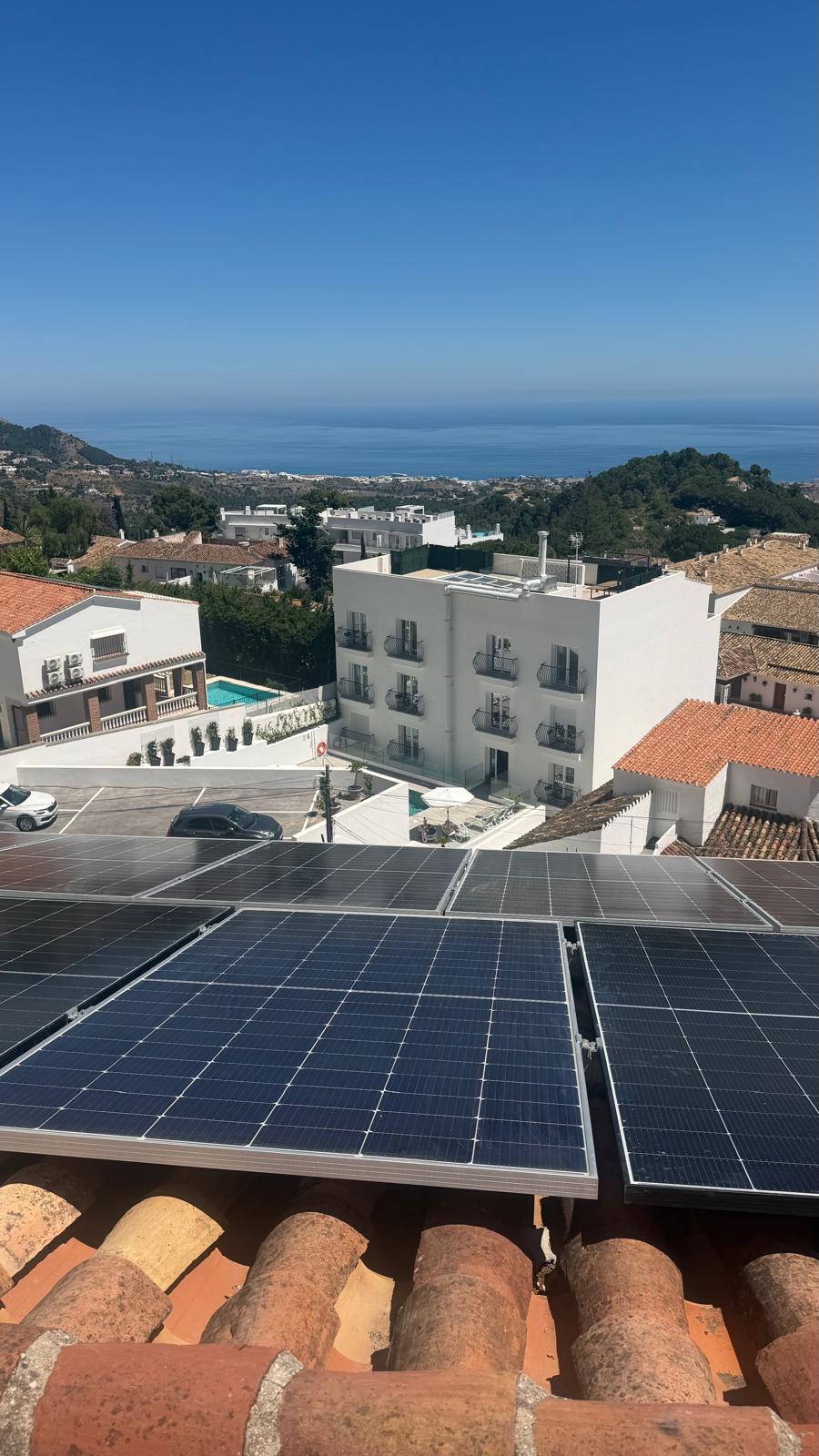
Solar Panels Rescued in Mijas — Wind Damage Emergency & Proper Reinstallation
Panels safe & properly reinstalled
Villa Solar + Battery - Marbella
See the installation scope and equipment below; no financial outcome is promised.
Off-Grid Solar System - Estepona Hills
See the installation scope and equipment below; no financial outcome is promised.