
9kW Hybrid Solar — Expansion-Ready, Elviria
10kW Deye SUN-10K hybrid solar with 9.6kWh LiFePO4 battery on an Elviria tile-roof villa — battery-ready architecture from day one, dual MPPT strings, and full BMS commissioning.
 By Ben Hayden
Project Overview
The Challenge
The Elviria villa had a strong existing electricity contract (10kW single-phase, 40A) and south-facing roof in excellent condition — on the surface, an ideal solar candidate. The complications were in the details. The client had already received three quotes ranging from €8,500 to €22,000 for similar 9kW systems, with wildly different inverter and panel specifications and no explanation of the design trade-offs. More importantly, the client was planning to add a pool heat pump within 18 months, which would increase electricity consumption by an estimated 3,500 kWh per year — and he wanted to know whether the solar system should be sized for current consumption or future consumption. The challenge was to design a properly-engineered system with an honest forward-looking analysis.
The Solution
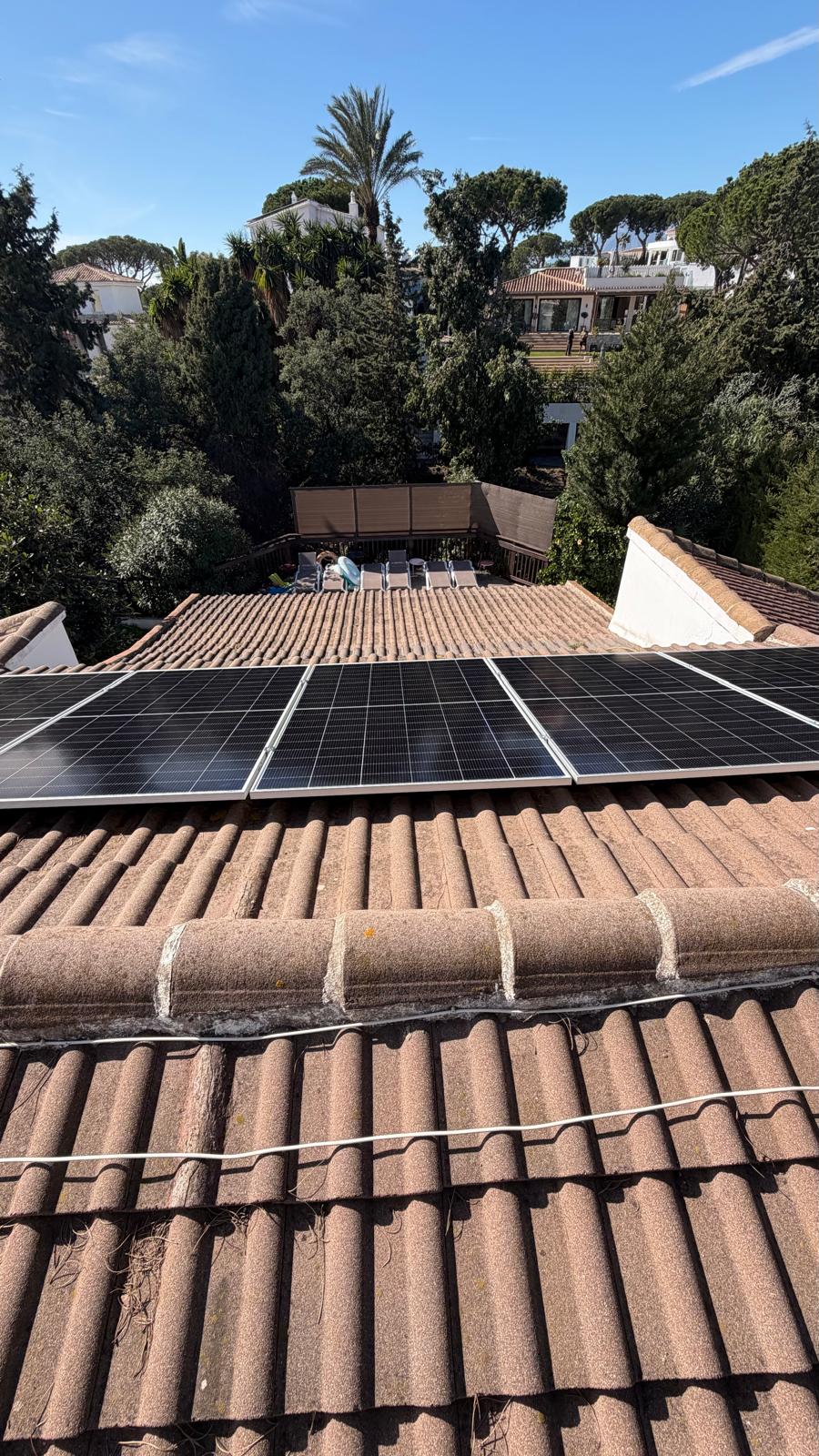
Residential solar installation in Elviria pairing a Deye SUN-10K-SG04LP3-EU three-phase hybrid inverter with 18 × 500 W panels on a tiled roof. The panels use two MPPT inputs and a rail-and-hook mounting arrangement. The 9 kWp panel rating and 10 kW inverter AC rating describe different parts of the system; they are not a guarantee of production or a free allowance for future equipment. Any battery addition requires compatibility, protection and commissioning checks, and further panels require a new assessment of string voltage, current, mounting, inverter limits and applicable documentation. Annual yield and savings require a site-specific calculation and actual consumption data.
Technical Specifications
- Deye SUN-10K-SG04LP3-EU 10kW three-phase hybrid inverter (97.6% peak efficiency, dual MPPT, battery-ready)
- 18× 500W Tier-1 monocrystalline half-cut cell panels (9kW total array)
- Coplanar aluminium rail mounting system with stainless steel tile hooks
- Two independent MPPT string configuration across separate roof planes
- 90% inverter loading ratio — 1kW expansion headroom for future pool heat pump integration
- Integrated Solis energy meter for real-time production and consumption monitoring
- AC/DC protection board with surge protection devices (SPD Type II)
- Full boletín eléctrico and grid-connection registration with Endesa
Our Installation Process
Consumption Analysis & Future Load Planning
We reviewed 24 months of the client's Endesa bills: average consumption 21,600 kWh/year, peaking in July-August with AC and pool filtration. Adding an 8kW Zodiac pool heat pump running April-November adds approximately 3,600 kWh/year. Total future consumption: approximately 25,200 kWh/year. A 9kW solar array in Elviria (1,800 kWh/kWp irradiance) generates approximately 16,200 kWh/year — offsetting 64% of future consumption. If sized for current consumption only, the system would have been oversized for today and correctly sized for tomorrow.
Deye SUN-10K Hybrid Inverter — Battery-Ready Architecture
The Deye SUN-10K-SG04LP3-EU was specified over a conventional grid-tied inverter for one reason: it is battery-ready without replacement. When the client decides to add battery storage (after experiencing their first summer's solar generation), a 48V low-voltage lithium battery (Pylontech US5000 or DEYE BOS-G) connects directly to the existing inverter's battery terminals — no rewiring. The inverter was loaded to 90% (9kW on a 10kW inverter) leaving 1kW of headroom for future array expansion.
Tile Roof Mounting & Dual MPPT Configuration
The traditional Spanish clay tile roof required individual stainless steel tile hooks — no through-roof anchors — preserving the waterproofing membrane. 18 panels were split across two roof planes (12 south at 20° pitch, 6 south-east at 18° pitch) connected to independent MPPT inputs on the Deye inverter. The slight pitch difference between planes is handled independently, ensuring each string operates at its optimum voltage regardless of the other.
Battery BMS Commissioning, Boletín Eléctrico & Owner Handover
The Deye hybrid inverter's battery management system was configured for self-consumption maximisation: solar generation priority goes to household loads first, then battery charging, then grid export. Time-of-use programming was set to use grid power only during the cheapest 02:00–06:00 tariff window for any top-up charging needed. A controlled battery discharge test was run: the 10kWh bank maintained an average household load of 800W for 11 hours — confirming effective overnight coverage. The Boletín Eléctrico was completed and submitted to the Delegación de Industria on commissioning day, and the CAU number was obtained from Endesa within 9 working days. The homeowner received the Deye SolarmanPV app credentials, a fault-finding reference card explaining the inverter's LED status codes, and a laminated commissioning summary — essential given the property is a holiday home with periods of remote management.
Results
See the installation scope and equipment below; no financial outcome is promised.
Backed by Research
References for checking the proposed design. These sources do not certify this project's performance, savings, eligibility or commissioning records.
Estimate solar yield for the actual site
Annual generation depends on location, orientation, tilt, shading and system losses. An irradiance figure is not a guaranteed yield per installed kilowatt. State the assumptions and compare the estimate with the property's consumption.
European Commission — PVGIS ↗Check the applicable self-consumption arrangement
RD 244/2019 regulates administrative, technical and economic conditions for self-consumption. Export compensation is subject to the applicable arrangement and contract; exported energy is not automatically valued at the retail import price.
BOE — RD 244/2019 ↗Tax relief needs separate eligibility checks
Do not assume solar qualifies for an income-tax deduction or a standard municipal IBI discount. Check current AEAT conditions and the property's municipal ordinance, required evidence, dates and application process before including an incentive in a budget.
Agencia Tributaria — current tax guidance ↗Photo Gallery
Frequently Asked Questions
Related Services
LIT services in Elviria, Marbella directly related to this work.
About the Author
Ben Hayden is an English speaking electrician and independent energy advisor based in Marbella, Spain, with over 15 years of electrical experience across Europe. He provides independent energy and electrical checks for overseas property owners and managers across the Costa del Sol — helping clients cut electricity bills, navigate Spanish regulations, and make confident decisions on solar PV, heat pump, EV charger and battery storage projects. Ben advises in plain English on projects where the paperwork is in Spanish and the stakes are high. His writing has appeared in ExpatArrivals, The Olive Press, Euro Weekly News, BuildingTalk and pv magazine.
Want a similar project?
Free consultation and no-obligation quote for Costa del Sol properties.
Quote ConfiguratorProject Details
- Location
- Elviria, Marbella, Málaga
- Completed
- February 2026
- Service
- Solar
- Author
- Ben Hayden
Related Projects
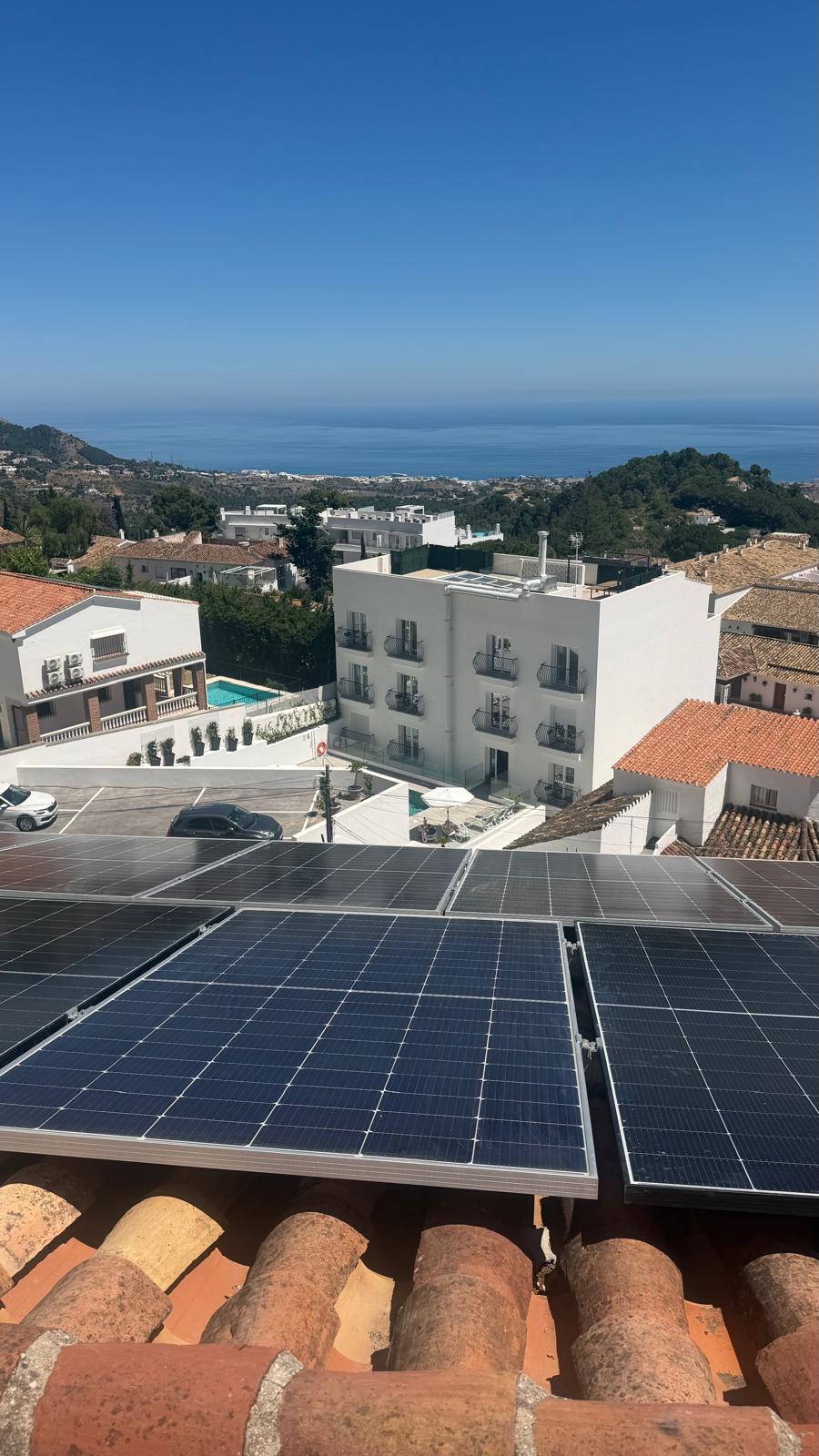
Solar Panels Rescued in Mijas — Wind Damage Emergency & Proper Reinstallation
Panels safe & properly reinstalled
Villa Solar + Battery - Marbella
See the installation scope and equipment below; no financial outcome is promised.
Off-Grid Solar System - Estepona Hills
See the installation scope and equipment below; no financial outcome is promised.