
EV Charger Installation — Orbis Viaris 7.4 kW Single-Phase, Pedestal Mount, San Pedro de Alcántara (Marbella)
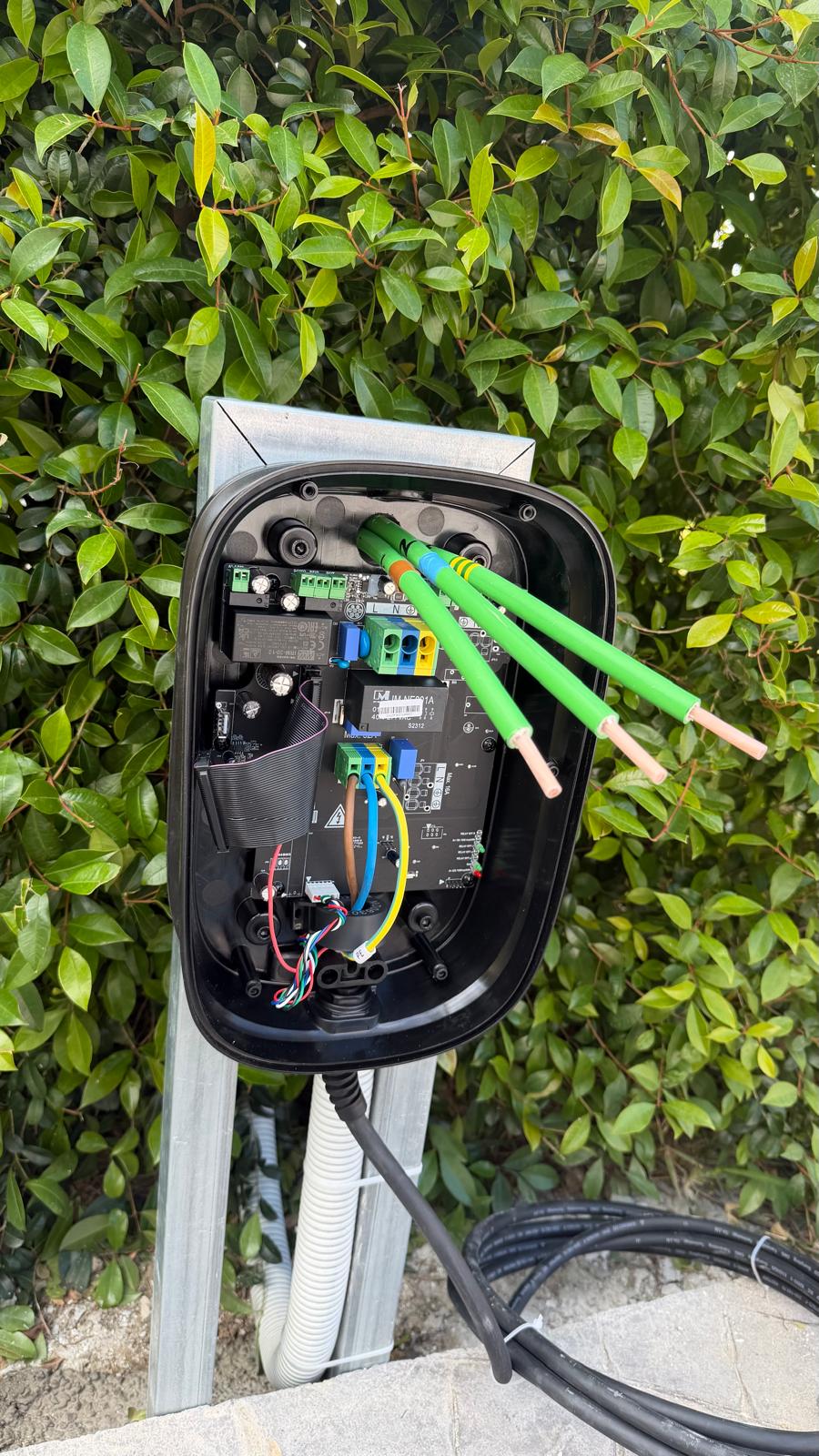
Orbis Viaris home charging on a garden pedestal in San Pedro de Alcántara
 By Ben Hayden
Project Overview
The Challenge: Open-Driveway Villa with No Garage on a Single-Phase 230 V Supply — Wall-Mount Charger Not Viable, Stepping Up to Three-Phase Not Justified for One EV
Planning a charger mounting position and electrical route for a private driveway while accounting for the home's available capacity.
The Solution
Orbis Viaris home EV charger installed on a dedicated pedestal at a property in San Pedro de Alcántara, Marbella. The photographs document the charger and mounting arrangement. A 7.4 kW single-phase rating is a nominal equipment capability, not a promise of delivered power or kilometres per hour. Vehicle limits, available supply and commissioned load-management settings determine actual charging. Cable sizing, protective devices and test results must come from the installation design and records, not be inferred from a photograph.
Technical Specifications
- Home EV charging in San Pedro de Alcántara, Marbella
- Orbis Viaris charger and dedicated pedestal shown in the project photographs
- Single-phase charging: confirm the vehicle AC limit and configured current
- Confirm load-management compatibility and settings for the actual supply
- Protection and commissioning documentation are installation-specific; no test measurements or certificate filing are inferred here
Results
Orbis Viaris single-phase home charging with load management on a pedestal in San Pedro. Actual charging power depends on the vehicle, supply and commissioned settings.
Backed by Research
References for checking the proposed design. These sources do not certify this project's performance, savings, eligibility or commissioning records.
Specify charging against the vehicle and supply
A 7.4 kW, 11 kW or 22 kW equipment rating is not a promise of delivered power. Vehicle AC limits, phases, supply capacity and configured current determine charging. Cable sizing, earthing, RCD/DC fault protection, surge protection and documentation must follow the applicable design, REBT/ITC-BT-52 and manufacturer instructions.
BOE — REBT / ITC-BT-52 ↗Communal private-space charging has a defined notification rule
LPH article 17.5 provides prior notification for private-use charging in an individual garage space, with installation and consumption costs borne by the interested users. Shared infrastructure changes or other arrangements may require additional assessment; do not assume either universal neighbour consent or unrestricted work.
BOE — Ley de Propiedad Horizontal, article 17 ↗Check current incentive eligibility before budgeting
An eligible spending base is not the deduction itself. Confirm the current tax rule, dates, payment method, installation use and subsidised amounts with AEAT. Load management and solar compatibility also need model-specific checks; neither guarantees free charging or prevents every electrical trip.
Agencia Tributaria — current tax guidance ↗Work Completed
- Home EV charging in San Pedro de Alcántara, Marbella
- Orbis Viaris charger and dedicated pedestal shown in the project photographs
- Single-phase charging: confirm the vehicle AC limit and configured current
- Confirm load-management compatibility and settings for the actual supply
- Protection and commissioning documentation are installation-specific; no test measurements or certificate filing are inferred here
Photo Gallery
Frequently Asked Questions
Related Services
LIT services in San Pedro de Alcántara, Marbella directly related to this work.
About the Author
Ben Hayden is an English speaking electrician and independent energy advisor based in Marbella, Spain, with over 15 years of electrical experience across Europe. He provides independent energy and electrical checks for overseas property owners and managers across the Costa del Sol — helping clients cut electricity bills, navigate Spanish regulations, and make confident decisions on solar PV, heat pump, EV charger and battery storage projects. Ben advises in plain English on projects where the paperwork is in Spanish and the stakes are high. His writing has appeared in ExpatArrivals, The Olive Press, Euro Weekly News, BuildingTalk and pv magazine.
Want a similar project?
Free consultation and no-obligation quote for Costa del Sol properties.
Quote ConfiguratorProject Details
- Location
- San Pedro de Alcántara, Marbella, Málaga
- Completed
- May 2026
- Service
- Ev Charging
- Author
- Ben Hayden
Related Projects
EV Charging Station - La Cala de Mijas
See the installation scope and equipment below; no financial outcome is promised.
Commercial EV Charging - Marbella Restaurant
Commercial EV charging infrastructure
Tesla Wall Connector Gen 3 — Private Garage, Estepona
Home EV charging installation